
Introduction to 2025 series of short stories.
Dalang published Footprints / Tapak Tilas, the 49 short-story, bilingual compilation in 2022. The publication celebrated our tenth anniversary and acknowledged the contributing 44 authors and 18 translators. This launch resulted in the seven short stories to be featured here in 2025.
Each of these short-story authors represents one of the seven areas Indonesia is known for.
During the Footprints / Tapak Tilas launch event in each region, we asked the audience for questions and offered a competition. The most in-depth question submitted, that would help an up-and-coming author or translator, would win and receive a copy of Footprints / Tapak Tilas. The winners were requested to write a short story and promised that the professionally edited work and its translation would be featured on our website.
These authors are mostly young, aspiring writers with a keen interest in literature and sense of nationalism. We hope that being published on our website will give them a foothold into the literary world and inspire them to continue the journey with their writing muse.
Our stories are not only geared to develop writing skills, but are also aimed at nurturing Indonesian literature with the hope of breaking through international walls. As for our foreign readers, we hope our stories bring enlightenment regarding Indonesian customs, culture, history, and society. For the Indonesian readers, we hope to awaken and/or nurture a sense of pride in their home country and the bounty it has to offer.
A recording of the events can be found at:
https://sites.google.com/view/bincangsastra-eng/beranda
Junaedi Setiyono
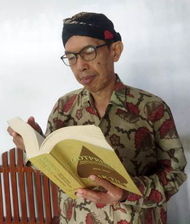
Junaedi Setiyono received a scholarship from Ohio State University to conduct research as part of his doctorate degree in language education, which he received in 2016 from the State University in Semarang, Central Java. He felt being part of Dalang Publishing after he was entrusted with the edit of Lolong Anjing di Bulan (Sanata Dharma University Press 2018), a novel by Arafat Nur, and the translation of two short stories: Mengenang Padewakkang, by Andi Batara Al Isra, and Ketuk Lumpang, by Muna Masyari — both published in 2022 in Dalang’s Footprints/Tapak Tilas, a bilingual short story compilation.
Setiyono’s most recent assignment — to edit the 2025 series of six short stories to be published in installments on Dalang’s website — gave him the opportunity to improve his own writing skills, including accurate word placement, appropriate sentence structure, and careful examination of the storyline’s plausibility as composed by the author.
Dalang has published two of Setiyono’s novels: Dasamuka (Penerbit Ombak 2017) and Tembang dan Perang (Penerbit Kanisius 2020).
Setiyono teaches writing and translation at his alma mater, the Muhammadiyah University of Purworejo. He received three awards for Dasamuka from: the Jakarta Arts Council; the Indonesian Ministry of Education and Culture; and the Southeast Asian Literature Council.
Junaedi Setiyono: junaedi.setiyono@yahoo.co.id
Terre Gorham

Terre Gorham has spent her entire life coaxing words to sing. Briarcliff Elementary School “published” her first short story when she was in 2nd grade. She went on to earn a degree in writing. She freelanced her work until she landed a full-time job as editor of The Downtowner Magazine, in Memphis, TN, where she wrote, edited, and guided young writers for more than 20 years. Gorham has ghost-written a novel for a non-profit organization that helps abused women. She joined Dalang Publishing in 2017 as the English language editor. Her words have been published in hundreds of publications. She is currently working for an event production company where she edits documents ranging from client presentation decks to policy manuals. Now, nearing “retirement age,” she continues her editing work on a freelance basis once again.
Terre Gorham: terregorham@gmail.com
Gagak Putih di Menara Tallo
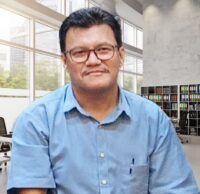
In 2005, Umar Thamrin received a Fulbright grant and a Catherine and William L. Magistretti Graduate Fellowship for his graduate studies in the United States. He completed his Ph.D. in Southeast Asian Studies with the designated emphasis in Critical Theory at the University of California, Berkeley, in 2016. Before returning to Indonesia in 2017, he received a one-year appointment as a research and teaching fellow at the University of Oregon.
Back in his home country, Umar became disturbed by several social conditions he encountered there, and is saddened that the common people have remained marginalized while society ignores the lessons of its history. These conditions have prompted him to think, to remember, and to write. He is currently teaching linguistics at Alauddin State Islamic University.
Umar Thamrin: umar2x.umar@gmail.com
***
Gagak Putih di Menara Tallo
Asap dupa mengepul dari tungku loyang emasku, membelit udara yang sudah sesak oleh bau anyir laut, semerbak yang telah kuhirup sejak tiang-tiang pertama Kerajaan Siang dipancangkan di pesisir Sulawesi Selatan ini. Sukmaku masih bergetar setiap kali teringat petir yang dulu menyambar loyang ini dengan murka. Pada hari itu aku terhempas dari tangga langit ketika mengawal bissu agung We Salenreng dan We Apanglangi. Para rohaniwan kerajaan langit itu turun menapakkan kaki di bumi yang gulita ini. Sampai hari ini, loyang ini masih setia menemaniku untuk merawat nyawa manusia-manusia fana yang sukmanya kian redup digenggam kegelapan.
Di hadapanku, Antonio de Paiva terbaring seperti seonggok daging tak berguna. Kulitnya yang seputih kerbau bulai tampak begitu rapuh bagi mataku yang telah menyaksikan matahari terbit dan tenggelam selama empat ratus tahun. Hidung kakatuanya kembang-kempis berusaha meraup sisa napas. Seharusnya aku iba melihatnya, tetapi batinku tahu saudagar Portugis ini adalah laknat yang dikirim laut untuk menghancurkan Siang. Tahun 1544 ini hanyalah satu tarikan napas pendek dalam ingatan panjangku. Namun aku merasakan ada sesuatu yang berbeda pada pusaran angin kali ini, seolah-olah waktu sedang bersiap untuk patah. Aku tahu mereka yang berkerumun di balik bayangan tiang istana melihatku dengan ngeri, membisikkan namaku sebagai penyihir yang menolak mati. Mereka benar, meski nalar mereka takkan sanggup memahami bahwa dalam nadiku mengalir darah putih Nasauleng, sang dewi langit, yang menjadikanku penjaga tanah ini jauh sebelum kakek buyut mereka lahir.
Aku melangkah maju, membiarkan jemariku yang berbau kemenyan menyentuh keningnya yang dingin. Karaeng Kodingareng, penguasa kerajaan Siang, berdiri di belakangku dengan mata penuh harapan. Dia tak sadar bahwa harapan yang sama telah kulihat di mata para raja-raja sebelumnya.
Orang-orang di sekitar kami berkerumun, memandang Antonio dengan ngeri dan penasaran. Mereka tidak membutuhkan kata-kata untuk bertanya. Aku bisa mendengar degup ketakutan di hati mereka, sama jelasnya dengan aku mendengar rencana-rencana licik yang mulai bersemi di hati Antonio yang sekarat.
“Sembuhkan dia,” perintah Karaeng Kodingareng.
Aku menghirup asap dari loyangku, merasakannya memenuhi paru-paruku yang telah bernapas selama empat ratus tahun. Menyembuhkannya adalah perkara sepele. Namun, saat aku mengembuskan asap ke mukanya, aku tahu bahwa aku tidak hanya memulihkan raga seorang saudagar; aku sedang memberi nyawa pada malapetaka yang akan mengubah sejarah kami selamanya.
Asap dupa menyembur dari mulutku, membelit wajah pucat Antonio seperti selimut abu. Dia tersedak, lalu matanya terbuka. Warna matanya mengingatkanku pada air laut yang dingin dan asing. Dia tidak bangkit dengan rasa syukur. Dia tegak dengan keangkuhan seekor ular sanca yang baru terbangun setelah menelan seekor kerbau. Hal pertama yang dia sasar adalah barisan para bissu di belakangku. Aku bisa merasakan gelombang rasa jijik memancar dari tatapannya saat melihat kulit mereka yang halus dan rambut yang tergerai. Baginya, kesucian kami hanyalah sebuah keganjilan yang memuakkan.
“Tinggallah,” ujar Karaeng Kodingareng, suaranya mengandung nada memohon yang membuat hatiku perih. “Istirahatlah di Siang.”
Antonio yang masih terlalu lemah untuk menggerakkan lidah mendongak. Dia tersenyum, tetapi senyum itu tidak sampai ke matanya yang tetap terpaku pada langit-langit istana, seolah-olah Karaeng Kodingareng, penguasaku yang agung, hanya seekor serangga di bawah kakinya. Dagunya selalu terangkat, menantang wibawa leluhur kami. Kata-katanya mengalir seperti madu beracun. Hanya dalam hitungan hari, dia mulai membisikkan nama Tuhannya, memutarbalikkan ketakutan Karaeng Kodingareng menjadi senjata.
Belum genap dua pekan matahari mengelupas sisa-sisa maut dari kulitnya, raga asing itu sudah tegak melintasi balai, menginjak lantai kayu dengan derap yang seolah-olah dialah yang memiliki setiap serat kayu di istana ini. Tatapannya terlalu angkuh untuk menunduk melihat lantai tempatnya berpijak. Antonio sepertinya telah lupa bahwa tanpa tiupan sukmaku ke dalam paru-parunya, jasadnya sudah lama membusuk di dalam tanah.
Suara saudagar Portugis itu kini merayap di telinga penguasaku, bukan lagi sebagai kata-kata, melainkan derit halus ribuan rahang anai-anai yang sedang berpesta mengunyah jantung bambu betung dari dalam. Luarnya tampak masih hijau dan kokoh menjulang, tetapi aku tahu, keteguhan hati Karaeng Kodingareng telah lumat menjadi timbunan serbuk hampa yang hanya menunggu waktu untuk runtuh ditiup angin. Matanya yang dulu setajam elang kini meredup oleh ketakutan, terpaku pada salib perak yang menggantung di dada Antonio seakan benda itu adalah dinding gaib yang sanggup membungkam deru mantra Islam yang kian kencang ditiupkan dari cakrawala kesultanan Gowa-Tallo. Penguasaku telah kehilangan nalar agungnya. Menurutnya, salib itu bisa menjadi tameng untuk melindungi takhtanya yang kian keropos. Aku hanya bisa meratapi kebodohan ini dalam diam, menyaksikan runtuhnya keyakinan Karaeng Kodingareng atas darah putih Nasauleng yang telah menjaga tanah leluhur ini.
Aku melihat Karaeng Kodingareng mulai gemetar. Di balik singgasananya, aku bisa mendengar detak jantungnya yang dipenuhi kecemasan tentang pemberontakan dan kekuasaan yang mulai retak. Antonio menggunakan berita kejatuhan Malaka sebagai cambuk untuk menggiring Karaeng Kodingareng ke dalam jebakannya. “Portugis adalah pelindung,” bisik si pembawa sial itu, padahal yang dia lihat di pelabuhan kami hanyalah angka-angka keuntungan.
Lalu, malapetaka itu benar-benar mewujud di tepi sungai.
Air sungai yang keruh membasahi pinggang Karaeng Kodingareng. Aku berdiri di tepian, jemariku mengepal hingga kuku-kukuku melukai telapak tangan sendiri. Dia menunduk di hadapan Antonio, bersimpuh seperti seorang ata, yang meminta belas kasihan. Antonio berlutut, menyendok air dengan tangannya yang biasa menghitung kepingan emas, lalu menyiramkannya ke kepala Karaeng Kodingareng.
“Don Juan,” nama itu meluncur dari bibir Antonio, membunuh nama Karaeng Kodingareng yang telah aku jaga selama tiga puluh tahun lebih.
Aku ingin muntah melihatnya berlaku alim. Aku tahu di balik jubah yang dia paksakan, detak jantungnya tidak bergetar karena iman, melainkan karena kerakusan pedagang yang licik. Dia bukan seorang pendeta; dia hanyalah seekor musang yang sedang menandai wilayah buruannya. Dia menyebut tanah kami Celebes, sebuah nama asing yang mengaburkan asal-usul kami. Karaeng Kodingareng telah menjadi domba yang patuh, sementara pelabuhan megah kami, kini hanyalah sebuah catatan di buku keuangan milik seorang saudagar asing.
***
Pasir itu kini merayap seperti wabah. Setiap kali aku melangkah di dermaga, bunyi gesekan butiran halus di bawah telapak kakiku terasa seperti tawa ejekan Antonio. Sungai Siang yang dulu jernih kini memuntahkan lumpur dan pasir, menyumbat pelabuhan hingga kapal-kapal besar tak lagi berani merapat. Aku mencium bau anyir dari ikan yang membusuk di lumpur dangkal, sementara pedagang Melayu mengemas barang-barang mereka dalam diam, meninggalkan Siang yang kini mulai berbau abu dan kemiskinan.
“Alam sedang murka, Karaeng,” kataku, menatap punggung penguasaku yang kini selalu terbungkus jubah asing. “Siang sedang sesak napas karena pasir yang Karaeng undang.”
Karaeng Kodingareng yang dengan sangat bangga menyandang nama Don Juan, nama yang aku muak menyebutnya, bahkan tidak menoleh. Dia sibuk mengelus salib perak di dadanya. “Hanya masalah pasir kecil, Pinati. Kau terlalu membesar-besarkan hal sepele. Kita akan memerintahkan para ata untuk mengeruknya. Selesai.”
Hatiku perih melihatnya. Dia benar-benar telah kehilangan ingatan leluhurnya. Dia lupa bahwa dalam nadinya mengalir darah putih Nasauleng, dewi langit yang turun untuk menjaga tanah ini. Dengan mengakui dirinya sebagai anak manusia yang lahir dari berahi, dia telah membuang kedewataannya demi dongeng seorang saudagar.
***
Sore ini, menjelang matahari tertelan laut, aku berdiri di tepi sungai, menghibur diriku dengan melihat gelap merayap pada pohon-pohon yang menjulang ke langit. Namun, keheningan ini terasa berbeda. Ada jeda yang ganjil ⸺ seolah alam sedang menahan napas, menunggu sesuatu yang salah terjadi.
Dari kejauhan, telingaku menangkap suara-suara langkah kaki mendekatiku. Hawa dingin kabut fajar yang mulai turun merayap di kulitku. Aku melangkah keluar dari kabut, membiarkan rupa fana ini kembali memadat. Di depanku, barisan titik cahaya berpendar sayup-sayup, seperti bara yang hampir mati kehabisan napas di ujung malam. Obor-obor itu berjejer kaku dalam genggaman tangan yang gemetar.
Kerumunan manusia di hadapanku membeku, menjadi patung-patung bernapas yang terpaku pada kemunculanku. Aku menatap mata mereka yang memantulkan cahaya redup dari api yang kian sekarat tertiup angin lembap.
Aku melangkah dengan tenang. Di hadapan mereka aku berkata, “Aku mencintai Siang lebih dari kalian mencintai nyawa kalian. Cintaku seperti Asmodeus yang menjaga Sarah dari tangan-tangan nista. Tetapi Antonio? Laki-laki itu memandang tanah ini hanya sebagai ladang untuk memuaskan keserakahannya.”
Aku menangkap kilatan tangan-tangan yang terjulur ke tanah, mendengar bunyi gesekan jemari mereka pada kerikil yang terdengar seperti desis ribuan ular.
Aku tidak menunggu sampai teriakan mereka habis Siang sedang sesak napas karena pasir yang Karaeng undang.”
Mereka tidak lagi melihatku sebagai pinati, tetapi sebagai hantu yang diciptakan oleh lidah beracun Antonio.
Malam itu, di dermaga yang sepi, aku menendang perahuku menjauhi tepian. Aku tidak membutuhkan dayung. Alam masih mengenali suaraku lebih baik daripada mereka yang baru saja dibaptis air sungai. Aku memerintahkan angin untuk menarik layarku. Aku minta pasir-pasir yang selama ini menyumbat mulut sungai bergeser ke samping. Pasir-pasir patuh dan membuka jalan setapak yang jernih dan licin, membiarkan perahuku meluncur menuju laut, meninggalkan Kerajaan Siang yang kini mulai berbau kematian.
Aku berbelok memasuki muara Sungai Tallo. Aku bukan lagi pinati. Kini, aku hanyalah daun kering yang hanyut.
Angin tiba-tiba berhenti berbisik. Suara kayu perahu yang berderit terhenti oleh hantaman tumpul. Di tengah sungai yang seharusnya dalam, sebuah batu karang putih muncul, mencuat seperti gigi raksasa yang hendak menelan perahuku. Jantungku berdegup kencang. Apakah ini cara We Nyilik Timoq, menghukumku karena aku meninggalkan Siang yang sekarat? Dewi penguasa dunia bawah tidak pernah semurka ini.
Karang putih itu pecah menjadi kepingan-kepingan hidup yang mengepung perahu. Moncong-moncong dingin muncul dari permukaan air tanpa riak, diikuti oleh sepasang mata pucat yang menatap langsung ke jiwaku. Mereka bukan pemangsa biasa; mereka adalah para dewata sungai. Aku membungkuk dalam-dalam, membiarkan dahiku menyentuh kayu perahu yang lembap.
Tidak ada gigi yang menghunjam, tidak ada air yang bergolak. Tatapan mereka tajam tetapi tenang. “Ikutilah arus ini, Pinati. Jangan melawan,” kata salah satu dari mereka.
Mereka mendorong perahuku menuju tepian. Saat aku mendongak, buaya-buaya putih itu telah menghilang ke dalam kegelapan sungai. Hening. Tak ada suara percikan, seolah-olah alam baru saja menghapus jejak mereka. Aku berdiri sendirian, menyadari bahwa arus zaman ini terlalu kuat untuk kubendung. Aku bukan lagi pengatur takdir, melainkan hanya penumpang dari kehancuran yang tak terelakkan.
Setiap butiran pasir yang bergeser di bawah kakiku terasa seperti tawa ejekan yang tajam. Aku berdiri di tepi sungai, tetapi yang kudengar bukan lagi nyanyian air, melainkan desis kering tanah yang tercekik. Alam telah menjatuhkan hukumannya. Sungai ini kini memuntahkan pasir seakan memuntahkan dosa-dosa rakyat Siang yang telah membelakangiku.
Di kesunyian sungai ini, aku mencoba membasuh martabatku yang terkoyak. Aku muak pada raja dan rakyat Siang yang kini merasa lebih mulia dari sungai dan hutan, seolah-olah baptisan air sungai itu memberi mereka kuasa untuk memerintah alam. Lihatlah hasilnya: hewan-hewan menjadi buas, dan tanah Siang yang dulu keemasan kini berbau abu dan kehampaan.
Namun, di balik rasa muakku, ada sebuah lubang hitam kekaguman yang tak bisa kututup. Antonio tiba di Siang dengan napas yang hampir putus, kulit sepucat mayat, dan raga yang tak berdaya. Namun, dalam sekali kedipan mata sejarah, dia mampu mencerabut akar kepercayaan yang telah tertanam selama beratus-ratus tahun.
Ilmu hitam apa yang dia sembunyikan di balik jubah saudagarnya? Mengapa keabadianku selama empat abad kalah telak oleh kefanaan seorang pria Portugis? Aku adalah pinati yang kekal, tetapi di hadapan Antonio, aku merasa seperti bayangan yang perlahan memudar ditelan matahari asing.
***
Debu tipis mulai menyelimuti bahuku, menetap di atas kulitku yang tak pernah menua. Aku duduk bersila di tepian sungai yang sunyi, mencoba mengunci pintu pikiranku dari hiruk-pikuk pelabuhan Tallo di kejauhan. Aku bisa mendengar derit tiang kapal dagang yang datang membawa lada dan kain sutra, tetapi bagiku, suara-suara itu kini tak lebih dari dengung lalat di atas bangkai sebuah kerajaan.
Aku mencoba bersemedi, mencari titik nol di mana waktu berhenti berdetak. Namun, pikiranku tergelincir kembali pada Antonio. Pria itu datang seperti seonggok daging busuk yang terdampar. Dia tak tahu apa-apa tentang napas tanah Siang atau darah putih leluhur kami. Namun, dengan senjata bernama agama, dia menjatuhkan benteng-benteng yang tak mampu ditembus oleh meriam mana pun.
Yang paling melukai hatiku adalah Karaeng Kodingareng. Penguasaku yang mulia itu kini tampak begitu kerdil. Di hadapan Antonio, dia menanggalkan taringnya. Dia memamerkan jiwanya yang telanjang, yang ternyata hanya dipenuhi oleh ketakutan seorang pengecut.
Aku, lihatlah diriku kini; aku hanyalah bayangan di tanahku sendiri. Rakyat tak lagi berpaling padaku dengan mata yang meredup karena ketakutan. Bagaimana mungkin keabadianku kalah oleh kefanaan seorang saudagar?
Setiap kali bayangan Antonio muncul dalam semediku, aku merasakan kekosongan yang menyesakkan. Ilmunya tidak bisa kupahami, ilmu yang membalikkan hati manusia semudah membalikkan telapak tangan. Kesaktianku kini bukan lagi kehormatan tetapi penjara bawah tanah yang mengurungku dalam penyesalan.
Pelan-pelan, aku membiarkan ingatan tentang Siang memudar, seperti lumpur di atas batu yang tersapu hujan. Aku melepaskan ikatanku pada masa kini dan membiarkan jiwaku melayang, menembus kabut tebal masa depan, mencari sebuah zaman di mana namaku mungkin tak lagi berarti apa-apa.
Di penghujung malam 1565, keheningan yang meraja di tanah Siang terasa lebih berat daripada empat abad pengabdianku, keheningan yang lahir dari kekosongan batin seorang raja yang salah bertaruh dalam perjudian takdir. Aku teringat bagaimana mata Karaeng Kodingareng mulai kehilangan binar suci saat dia menatap ke arah barat laut, ke arah Kesultanan Malaka yang runtuh pada 1511. Di matanya, aku melihat sebuah pengkhianatan yang halus: dia mulai meragukan mantra-mantraku dan lebih memercayai Tuhan dan bedil yang dibawa Antonio demi menghalau gerakan Kesultanan Gowa-Tallo.
Karaeng Kodingareng mengira dengan memeluk salib dari bangsa yang menghancurkan jantung Islam di Malaka, dia akan mendapatkan tameng untuk melawan penguasa Muslim di tanahnya sendiri. Namun, inilah nasib yang menertawakannya: jatuhnya Malaka ke tangan Portugis justru menjadi napas baru bagi Gowa-Tallo. Para pedagang yang terusir dari utara membawa rahasia mesiu, kekayaan, dan dendam ke Makassar, membesarkan musuh kami menjadi raksasa yang tak tertandingi oleh doa-doa Katolik Karaeng Kodingareng.
Saat gerbang istana lumat, aku menyadari satu kebenaran yang jauh lebih dingin daripada air baptis Antonio. Di atas medan laga yang berbau belerang ini, kemenangan tidak lagi ditentukan oleh siapa yang memegang kitab paling suci atau siapa yang merapal mantra paling tua. Gowa-Tallo menang bukan karena agama mereka, dan Siang kalah bukan karena tuhannya Antonio berpaling.
Kemenangan itu datang dari moncong bedil dan dentum meriam yang berbicara lebih lantang daripada doa. Ternyata, nasib sebuah kerajaan tidak lagi digantungkan pada langit, melainkan pada siapa yang memiliki besi dan api paling mematikan di bumi. Karaeng Kodingareng telah menukar kesaktian leluhurnya demi mencari perlindungan pada agama bedil. Namun, dia justru dihancurkan oleh bedil-bedil yang lebih nyata milik saudaranya sendiri, meninggalkan aku sebagai saksi bahwa di zaman baru ini, logam telah menggantikan roh sebagai penguasa dunia.
Aku memalingkan mata batin darinya. Aku tidak bisa membayangkan rupa wajah Karaeng Kodingareng saat dia ditawan dan dibuang dari tanah leluhurnya. Selama berabad-abad, wajah itu bagiku adalah keperkasaan yang tak tergoyahkan. Namun kini, wajah yang dulu dipenuhi seri kedewataan itu harus luruh dan menjadi wajah seorang pesakitan yang kerdil di hadapan bedil-bedil besi.
***
Matahari senja meredup di ufuk Sungai Tallo, meninggalkan jejak merah yang tampak seperti luka lama yang belum kering di atas permukaan air. Aku tidak lagi menapak bumi; kedaulatanku telah lumat bersama jatuhnya Siang, dan kini aku melayang seperti kabut yang merangkak dari dasar sungai. Di tepi air, bayangan pohon-pohon mulai memanjang, merambat seperti tangan-tangan gurita hitam yang perlahan menangkap sisa cahaya yang masih terayun-ayun di atas permukaan air. Aku membiarkan diriku melebur ke dalam kegelapan itu, menjadi satu dengan sunyi.
Di hadapanku, sepasang kapal kayu berlambung coklat kehitam-hitaman menjulang tinggi, berdiri angkuh sebagai menara penguasa di muara sungai yang gelisah. Tiang-tiang layarnya yang kokoh seolah hendak membelah langit malam, membuat kapal-kapal dagang Melayu di sekelilingnya tampak seperti deretan bidak kecil yang rapuh. Di bawah hidung haluannya yang tajam dan dingin, perahu-perahu cadik nelayan setempat tersisih ke pinggiran, bergoyang tak berdaya diterjang ombak sisa dari gilingan arus yang mereka ciptakan.
Melihat keangkuhan itu, sesuatu yang panas meledak dalam sukmaku. Dalam amarah yang memburu, aku menghentakkan tanganku ke udara, memanggil badai. Aku ingin melihat bedil dan kepingan uang mereka tenggelam ke dasar lumpur.
Ombak menggulung dan menghantam lambung kapal, meletus menjadi tirai busa putih seakan membentur dinding karang. Sementara di sekitarnya, perahu-perahu nelayan patah seperti ranting kering. Aku menyaksikan tubuh-tubuh kerempeng itu berjuang berenang ke tepi. Aku hanya bisa menunduk dalam diam. Mengapa sihirku sekarang hanya bisa berguna untuk menyengsarakan orang-orang kecil?
Aku berbalik meninggalkan sungai yang tidak lagi berpihak kepadaku. Lantai hutan yang lembap meredam suara langkahku. Bau daun kering dan tanah yang tak pernah tersentuh matahari memenuhi paru-paruku. Di sini, di balik dinding pepohonan yang merayap tinggi seperti tiang-tiang raksasa, aku menemukan keheningan yang lebih bertuah daripada seluruh mantra yang pernah kurapal. Aku bersumpah: kakiku takkan pernah lagi menginjak tepian Sungai Tallo yang telah dikeruhkan oleh keangkuhan kapal-kapal manusia putih itu. Aku lebih memilih menyatu dengan lumut daripada menjadi saksi kejatuhan alam yang aku Aku menyaksikan tubuh-tubuh kerempeng itu berjuang berenang ke tepi.
Di kesunyian ini, hanya ada aku dan bayanganku. Namun, sebuah kepakan sayap yang ganjil memecah keheningan.
Sesosok wujud muncul dari kegelapan dahan: gagak putih, dengan bulu yang memantulkan cahaya pucat seperti tulang yang dijemur. Matanya yang bening menatapku tanpa berkedip, seolah bisa melihat setiap denyut dendam di hatiku. Aku mengenalinya, utusan maut bagi mereka yang berdarah putih.
Ia hinggap di dahan rendah. Lalu dengan suaranya yang halus dan parau, ia membisikkan tentang sebuah nyawa yang bahkan belum ditiupkan ke rahim ibu; seorang berdarah putih yang akan lahir saat abad ini berganti menjadi abad ketujuh belas. Seorang yang akan dihormati di tanah Eropa tetapi menjadi orang asing di rumahnya sendiri.
“Ilmunya …” bisikku, dan tiba-tiba rasa panas menjalar di dadaku. Jika pria masa depan itu memiliki ilmu yang lebih sakti dari Antonio, maka aku harus memilikinya. Dengan ilmu itu, aku akan mencabut akar manusia bulai dari tanah ini semudah mencabut ilalang mati.
Gagak putih itu tiba-tiba melebarkan sayapnya, mengeluarkan suara yang terdengar seperti tawa manusia yang tersedak. “Kau tidak akan pernah bisa menguasainya, Pinati,” suaranya bergema. “Matamu terlalu penuh dengan debu masa lalu untuk melihat cahaya ilmu itu.” Ia melesat pergi, menjadi riak putih yang ditelan hijaunya rimba.
Aku berdiri sendirian, mencengkeram udara kosong.
***
Tahun 1600. Gema tabuh-tabuhan dari istana Tallo merayap di sela-sela pepohonan, merayakan lahirnya bayi bernama Karaeng Pattingalloang. Bagiku, hidup manusia, entah dia berdarah putih atau merah, hanyalah riak kecil di permukaan sungai yang terus mengalir menuju muara yang sama: ketiadaan. Selama tiga puluh sembilan tahun, aku hanya menonton bayang-bayang saat dia naik takhta, menganggapnya tak lebih dari sekadar penguasa fana lainnya.
Sampai dia membangun menara itu.
Sebuah bangunan yang menusuk langit, tempat dia menyembunyikan benda asing yang dia sebut teropong. Galileo, pria yang menciptakan alat itu ternyata seagama dengan Antonio. Nama ini membisikkan ancaman sekaligus harapan di telingaku. Aku bisa merasakannya di ujung jemariku yang bergetar: benda itu bukan sekadar kaca dan logam, melainkan kunci untuk melampaui kelicikan Antonio dan memulihkan martabatku yang hancur.
Aku harus memilikinya.
Aku memejamkan mata, membiarkan napasku melambat hingga detak jantungku menyatu dengan kesunyian malam. Perlahan, wujud kasat mataku meluruh, melarut ke dalam embusan angin. Aku bukan lagi daging; aku adalah ketiadaan yang bergerak menembus dinding batu yang dingin. Bahkan Pattingalloang, dengan segala kecerdasannya, takkan menyadari kalau aku berdiri tepat di sampingnya.
Saat aku membuka mata di puncak menara, bau kertas tua dan minyak lampu menusuk hidungku. Di sana, Pattingalloang terpaku pada lensa kaca itu, seolah-olah seluruh alam semesta sedang berbisik kepadanya. Manusia aneh ini menolak percaya pada jin yang berkerumun di udara, tetapi memuja benda yang mampu menangkap cahaya dari langit.
Aku melirik catatan di atas mejanya. Pola bersegi-segi yang rumit, deretan angka yang berbaris seperti pasukan yang siap menyerang. Selama empat ratus tahun, aku hanya melihat langit sebagai tempat roh-roh gentayangan; aku tak pernah melihatnya sebagai sebuah naskah yang bisa dihitung. Inilah alasan mengapa aku kalah dari Antonio. Kekuatanku adalah sihir purba yang mulai berdebu, sementara mereka memiliki ilmu yang mampu membedah rahasia Tuhan.
Aku mengatupkan rahang rapat-rapat hingga sendinya terasa kaku, menelan paksa getaran ganjil yang mulai merayap dari pangkal tenggorokanku. Aku akan menunggu dalam kesenyapan yang paling kelam, menunggu saat yang tepat untuk merenggut alat sihir baru ini dan memusnahkan jejak manusia-manusia bulai itu dari tanah leluhurku selamanya.
Sunyi segera merayap masuk ke dalam menara saat derap langkah Pattingalloang dan para pembantunya memudar di balik pintu kayu. Aku melangkah keluar dari kegelapan, wujudku perlahan memadat di samping benda aneh ini. Teropong ini terbuat dari kayu sepanjang lenganku, dibungkus kulit berwarna merah berhiaskan corak segitiga dan kembang keemasan yang berkilau di bawah cahaya lampu minyak.
Aku mengulurkan tangan, menyentuh permukaannya. Rasanya sejuk dan lembut, seperti lumut basah yang tumbuh di atas batu. Ada getaran asing yang menjalar dari ujung kuku ke jantungku saat aku menarik ujungnya hingga memanjang. Dengan hati-hati, aku menyelimutinya dengan kain putih.
Aku memerintahkan angin membawaku ke puncak Gunung Bawakaraeng, titik tertinggi di mana dunia seolah bertekuk lutut di bawah kakiku. Di sana, di bawah langit tengah malam yang sehitam jelaga, aku memancangkan kaki teropong ini.
Aku menempelkan sebelah mataku pada lensa kaca yang dingin.
Seketika, aku terhenyak jatuh ke belakang, jantungku yang abadi seolah berhenti berdetak. Aku mengatur napas yang memburu sebelum kembali memberanikan diri mengintip. Di sana, di balik kaca ajaib itu, duniaku runtuh. Bola-bola raksasa, ada yang putih menyilaukan, ada yang merah membara, berputar dan menari seperti gasing di tangan dewa yang tak terlihat. Bulan tak lagi tampak seperti piringan perak yang tenang, melainkan karang raksasa yang penuh luka dan lubang, menggantung begitu dekat seolah aku bisa menyentuhnya.
Aku memutar teropong itu ke segala penjuru, mataku perih mencari-cari apa yang kulihat di catatan Pattingalloang. Mana pola persegi itu? Mana angka-angka mantra yang dia tulis dengan begitu khusyuk? Tidak ada. Langit tetap bisu, hanya berisi bola-bola batu bercahaya yang bergerak mengikuti alur lingkaran yang tak kumengerti.
Sampai fajar menyingsing dan cahaya matahari mulai membasuh puncak gunung, aku tetap tidak menemukan satu pun angka di angkasa. Pantas saja aku kalah dari Antonio. Selama empat ratus tahun, aku hanya melihat langit sebagai tempat bersemayamnya jin dan roh-roh gentayangan. Aku tak pernah tahu bahwa langit bisa dihitung.
Teropong ini hanyalah benda mati tanpa ilmu yang dimiliki Pattingalloang. Aku merasa kerdil. Aku yang sakti ternyata buta di hadapan kebenaran baru. Dengan berat hati, aku membungkus kembali alat itu dan mengembalikannya ke menara. Aku tidak butuh kacanya, aku butuh ilmunya. Aku harus tahu mantra apa yang digunakan mangkubumi itu untuk membaca pikiran Tuhan di atas sana.
*****
A White Crow at Tallo’s Tower

Purwanti Kusumaningtyas teaches at the English Literature Bachelor’s Program, Faculty of Language and Arts, Satya Wacana Christian University in Salatiga, Central Java. She earned her master’s and doctorate degrees from the American Studies Graduate Program, Faculty of Cultural Science, Gadjah Mada University, Yogyakarta. She has a wide range of interests, including mountain climbing and hiking, as well as poetry and short-story writing.
She has published her poems and short stories in anthologies, among others, “Furtive Notions” (DeePublish 2022) and “They Are Here” (DeePublish 2023). Some of her poems have been musicalized and performed in various non-profit, humanistic events, including LETSS Talk, a prominent feminist initiative in Indonesia, and Festival Musik Rumah (FMR). She has worked with Dalang Publishing since 2013, after discovering that she and the publisher share a passion to preserve and introduce Indonesia’s diversity to the world.
Purwanti can be reached at: purwanti.kusumaningtyas@uksw.edu
****
A White Crow at Tallo’s Tower
I have breathed the pungent scent of incense, billowing from the golden tray, mixed with the dense, briny scent of the sea air, since the first Siang Kingdom rose on the shores of South Sulawesi. Still, I tremble whenever I remember the day lightning struck that golden tray with a mad, blinding fury. It was the day I was hurled from the stairway of the sky while escorting the great, sacred bissu, We Salenreng and We Apanglangi. From the moment those genderless, spiritual figures descended from the kingdom of heaven onto the dark earth, the golden tray has remained with me while I watched over mortal humans as their souls slowly disappeared within the grip of darkness.
Before me, on the palace floor, lay Antonio de Paiva. After four hundred years of watching the sun rise and set, he appeared to me as a useless heap of flesh, white as an albino bull. The nostrils of his hooked nose flared as he struggled to catch his fleeting breath. I should have pitied him, but I knew with certainty that this Portuguese merchant was a curse sent by the sea to destroy Siang. The year 1544 is only a split second in my long memory, yet, at this time, the whirlwind felt different. It seemed ready to tear the world apart.
Behind the palace pillars, people gathered and watched me in horror. Whispering my name, they referred to me as the witch who refused to die. Perhaps they are right. Even though they were unable to understand that in my veins flowed the white blood of Nasauleng, the sky goddess who charged me with guarding this land long before their ancestors were born.
I stepped forward and touched Antonio de Paiva’s cold forehead with my incense-scented fingers. Behind me stood Karaeng Kodingareng, the ruler of Siang, his eyes pleading. He did not know that I had seen that same desperate hope in the faces of kings before him.
The people gathered around us, staring at Antonio with terror and curiosity. They needed no words to ask their question. I could hear their frightened heartbeats as clearly as I could sense the wicked plans already swelling inside Antonio’s weakening heart.
“Heal him,” Karaeng Kodingareng told me.
I inhaled the smoke from my golden tray and felt it fill lungs that had breathed for four centuries. Healing Antonio would be easy. But if I blew the smoke into his face, I knew I would not merely save the merchant; I would also give life to calamities that would twist the course of our history.
I exhaled the incense smoke, and it curled over Antonio’s face like a veil of ash. He choked, then opened his eyes — cold, foreign eyes, like seawater under a winter sky. He did not wake with gratitude. He rose upright like a python stirring after swallowing a water buffalo. He stared at the bissu standing behind me. I felt his disgust as his gaze moved over their smooth skin and loose hair. To him, our sacredness was nothing but a sickness, a grotesque, genderless strangeness he could not bear to understand.
“Please stay,” Karaeng Kodingareng said to Antonio. “Rest for a while in Siang.” His pleading tone hurt me.
Antonio was yet too weak to speak. He smiled instead and fixed his gaze on the palace ceiling as if Karaeng Kodingareng, my honored ruler, was no more than an insect beneath his feet.
With that lifted chin, he challenged the dignity of our ancestors. His words, sweet as honey, were cloaked venom beneath the surface. Within days, he began to whisper the name of his god, evoking Karaeng Kodingareng’s fear and turning it into a weapon.
In less than two weeks, the foreigner could walk through the palace, striding across the wooden floors as if he owned every joist and plank, too proud to look down at the ground beneath him. He seemed to forget that if I had not breathed life back into his chest, his body would already be rotting in the earth.
Karaeng Kodingareng, my lord, listened to the Portuguese merchant, whose words worked like termites feasting on the inside of a black bamboo. Just as the dying bamboo would continue to appear strong and healthy on the outside, I knew that Karaeng Kodingareng’s outward steadfastness had crumbled into a weak structure that would collapse under even a simple sigh of the wind. His sharp eagle eyes were now dimmed by fear as he gazed at the silver cross hanging around Antonio’s neck as if it were a magical charm that could silence the echo of Islam-heralding trumpets from the Gowa-Tallo Sultanate. My lord had lost his great sensibility of reasoning. He believed that silver cross would secure his wobbly throne. I could only lament such ignorance in silence while witnessing Karaeng Kodingareng’s loyalty to Nasauleng’s white blood that had protected this ancestral land erode.
I watched Karaeng Kodingareng tremble. Standing behind his throne, I could hear his thudding heart, anxious about the rebellion and Antonio’s crippling power. Antonio used the news about the fall of Malaka Regency to whip Karaeng Kodingareng into his trap.
While viewing our port for all of its benefits, the disaster carrier whispered, “Portugal is the protector.”
Then calamity truly arrived by the river.
Karaeng Kodingareng stood waist-deep in the murky river water. I watched from the bank, clenching my fists until my nails sunk into my palms. Bowing like an ata before Antonio, my lord indeed looked like a slave begging for mercy. Antonio bent, scooped water with the same hands he used to count gold coins, and poured it over Karaeng Kodingareng’s head.
“Don Juan,” Antonio uttered, erasing Karaeng Kodingareng’s name I had guarded for more than 30 years.
Antonio’s pious behavior sickened me. I knew that the heart beneath his robe did not beat with faith, but with a merchant’s sly greed. He was not a priest; he was just a palm civet marking his hunting ground. Antonio named our land Celebes, a foreign name that blurred our origin. Karaeng Kodingareng had become an obedient lamb, while our great Siang port was now merely a note in the foreign merchant’s accounting book.
***
Sand crept over our land like a plague. It crunched beneath my feet every time I walked through the port, crackling like Antonio’s mocking laughter. The Siang River, once clear, now roiled sluggishly with mud and sand. Large ships no longer dared to dock in the choked harbor. I smelled the stench of brine and rotting fish in the shallow sludge while Malay merchants packed their goods in silence, leaving Siang to the scents of poverty and gray ash.
“The universe is revolting, Karaeng,” I said, staring at my lord’s back, now wrapped in a foreign robe. “Siang is having difficulties breathing because of the sand you summoned.”
Karaeng Kodingareng, who proudly used his new name, Don Juan, which I loathed to mention, didn’t even turn his head. Instead, he busily fondled the silver cross lying against his chest. “The sand is only a small problem, Pinati. You enjoy magnifying trifle problems. All we need to do is to instruct slaves to dig it out. Finished!”
Pain tightened my chest. Karaeng Kodingareng had truly forgotten his ancestors. He had forgotten that the white blood of Nasauleng — the sky goddess who descended to earth to guard this land — flowed through his veins. He had reduced himself to an ordinary man born of desire and thrown away his divinity for the sake of a merchant’s tale.
***
As the sea swallowed the sun, I stood by the river, trying to lift my spirits by enjoying the trees’ silhouettes standing tall against the growing darkness. But the quietness felt different this time. It was a strange pause — as if the universe held its breath, waiting for something important to happen.
The cold, foggy air of a new day crawled against my skin. I heard steps approaching. I stepped out of the fog, allowing my immortal form to be. In front of me, a line of faint fiery lights sputtered in stiff torches, trembling in the hands that held them.
The crowd in front of me became frozen statues, stunned by my appearance. I looked back at them. Their eyes reflected the dying fire that continued to dim as the misty wind blew.
“I love Siang more than you love your own lives,” I said, walking calmly in front of them. “My love is like that of the demon Asmodeus guarding his lovely Sarah from unclean hands. But Antonio? That man looks at this land only as a place where he can satisfy his own greed.”
I glanced at their arms, stretching to the ground, causing snake-hissing sounds as their fingers picked up gravel by the fistfull. I didn’t wait for them to stop screaming at me. I vanished into my own shadow as the crowd started flinging gravel at me. They no longer saw me as pinati, the shaman, but as a ghost born from Antonio’s poisonous words.
That evening, at the silent port, I pushed my wooden boat away from the bank. I needed no oar. The universe still knew my voice better than it knew the voice of the man newly baptized in the river. I commanded the wind to fill my sail. I ordered the sand clogging the downstream current to part to the banks. It obeyed, splitting wide so my boat could slide unimpeded toward the sea, leaving behind the Kingdom of Siang, now heavy with the smell of death.
I turned to the mouth of the Tallo River. I was no longer a pinati. I was now only a dry, drifting leaf.
The wind suddently stopped its whispering. My boat screeched as though it had struck a submerged blunt pole. In the middle of the river, where the water should have been deep, a white coral rock had risen like a giant maw ready to swallow my boat. My heart raced. Is this how We Nyilik Timoq punishes me for abandoning Siang while it is dying? If so, the goddess of the underworld had never been this furious.
The white coral rock broke into living pieces which surrounded the boat. Cold snouts poked up through the water’s smooth surface as pale eyes pierced mine. These were not ordinary beasts; they were river gods. I bowed until my forehead touched the boat’s damp wood.
No sharp teeth, nor crashing waves met me, and I raised my head. The river gods stared at me fiercely, yet calmly. “Follow the current, Pinati,” said one. “Do not fight it!”
They pushed my boat towards the riverbank. The white crocodiles disappeared in the dark river. I was alone. I knew that the age-old river’s current was too strong for me to tame. I was no longer a controller of fate; instead, I was only a bystander at an inevitable destruction.
I stood on the riverbank. The touch of sand beneath my feet felt like laughter mocking me. The river no longer flowed like a melody; it choked liked the dry land it would one day become. Nature had spoken its sentence. The river now spat sand, as if ejecting the sins of the Siang people who had betrayed me.
The river quieted. I tried to restore my shredded dignity in the tranquility. I was sick of the king and the Siang people, who thought themselves mightier than the river and forest, as if the water baptism had bestowed them such authority. But no: animals became wild beasts, and Siang’s golden land stank of smoldering ashes.
Yet despite my discontent, I could not cover the black hole of my amazement. Antonio had arrived at Siang, as helpless and pale as a dead man. Yet in a deceptive wink of history’s eyes, one mortal man uprooted the belief system we had practiced through the ages.
What kind of black magic did Antonio hide beneath his merchant’s robe? Why were my four centuries of devotion so easily erased by this Portuguese man’s mortality? I was an immortal pinati, yet before Antonio, I was but a shadow, fading fast beneath the rays of a foreign sun.
***
A thin layer of dust settled on my forever-young skin. I sat crosslegged at the quiet river edge and tried to block the cacophony from the distant port of Tallo. The masts of the merchant ships that carried pepper and silk creaked and clanged, which sounded to me like flies buzzing on the corpse of a dead kingdom.
I turned to meditation, seeking point zero at which time paused. But my thoughts kept circling around Antonio. He had arrived like a hunk of rotting meat. He knew nothing — nor cared — about Siang’s soul or our ancestors’ white blood. Yet with the weapon called religion, he had destroyed every fortress that had sheltered us for centuries from attack.
What hurt me most was Karaeng Kodingareng’s behavior. My mighty lord was now stunted. He had sold his soul and bared what had really been inside him all along: cowardism.
And look at me, only a disgraced shadow in my own land. How could a merchant’s mortality defeat my eternity?
Every time my mind saw Antonio, I choked on emptiness. How could his magic switch human orientation as easily as a flip of the hand? My power was no longer an honor to me; it was a prison for my regret.
Slowly, I allowed my memories of Siang to slide away, like mud swept by the rain. I released myself from the present and let my soul float across the thick fog of the future, when my name would probably mean nothing at all.
At the end of 1565, the silence that smothered Siang felt heavier than anything during my centuries of service. The dark mood rose from the king’s empty heart and his failed gamble in his final game. I remembered when Karaeng Kodingareng lost his sacred bearing in 1511, when he stared southwest at Malaka Sultanate’s collapse. I saw a subtle betrayal then: my lord started to doubt me and instead trust the foreign god and rifles Antonio had introduced to defy the Gowa-Tallo Sultanate.
Karaeng Kodingareng had believed that by embracing the cross from the nation that had crushed Islam in Malacca, he would gain protection and strength against Muslim power in his own land. But Fate had only laughed at him. The fall of Malacca to the Portuguese sent a new wave of strength toward Gowa-Tallo. Merchants driven from the north carried the black secrets of gunpowder, wealth, and vengeance to Makassar. They nourished our enemies, who grew into giants that Karaeng Kodingareng’s Catholic prayers could not conquer.
When the palace’s gate crumbled, I realized a colder truth than Antonio’s baptismal water. On this sulphur-smelling battlefield, victory was not determined by who was holding the most sacred book or who could recite the oldest mantra. Gowa-Tallo’s religion did not make it win the battle, and Antonio’s god did not turn away from Siang to make it lose the war.
No, victory was determined by gun muzzles and cannon barrels that sang louder than prayers. I realized that a kingdom was not dependent upon the heaven in the sky, but on those who owned the deadliest iron and fire on earth. Karaeng Kodingareng had traded his ancestors’ power for protection from the religion named rifles, only to be destroyed by the guns of his own brother. I witnessed that in this age, metal and fire — not spirituality — were this new world’s authorities.
I turned my spiritual vision away. I could not imagine Karaeng Kodingareng’s face when he was arrested and exiled from his ancestral land. For me, he had been an unshakeable power for centuries, but now the face that had only reflected royalty and rightousness had become the face of a naive child who shrank before the threat of guns.
***
As the sun set in the Tallo River, it cast a red reflection on the water’s surface that looked like a wound trying to heal. I lost my existence when Siang fell, and now I floated like mist rising from the riverbed. At the water’s edge, the shadows of trees stretched longer and longer, creeping like tentacles grasping the last scraps of light. I let myself dissolve into the darkness to become one with its silence.
In front of me, a pair of large wooden ships with black-brown hulls stood tall — boastful to be the authoritative entity in the mouth of a restless river. Their towering masts split the night sky, overwhelming the native vessels, which appeared like fragile, small chess pieces. Below the big ships’ cold, sharp bows, the fishermen’s outrigger boats skirted aside, helplessly rocking in the wake the large ships caused.
At the sight of such arrogance, my wrath swelled. In a rage, I thrust my arms into the air and summoned the storm. I wanted to see their rifles and coins sink to the muddy bottom of the river.
When the storm’s angry waves hurled against the hulls, the water disintegrated into white foam, as if colliding with a coral reef. But the fishermen’s small boats broke like dry twigs. Thin, tired people struggled to reach the shore. I could only bow my head. Why does my magic now only make poor people suffer?
I turned and left the river that no longer supported me. The damp forest softened my steps. The smell of dry leaves and soil untouched by the sun filled my lungs. Here, behind the wall of giant pillar-like trees, I found more magical serenity than during the reciting of any mantra. I vowed I would never again set foot on the banks of the Tallo River, muddied by the white people’s ships. I chose to blend with the moss rather than witness the fall of the land I worshipped.
Only my shadow and I were present in this quietness. Then, a sound of beating wings broke the silence.
Among the dim leaves appeared a white crow, its feathers reflecting a pale light like dried bone. It perched on a low branch. When it stared at me, I saw every vengeful beat of my heart in its clear eyes. I recognized the messenger of death for those who carried white blood.
Then, it whispered softly and coarsely about a life that was not yet blown into a mother’s womb, a white-blood baby would be born in the 17th century. While he would be well respected in Europe, he’d remain a foreigner in his homeland.
“His magic …” I whispered, as warmth rushed through my chest. If this man of the future would become more powerful than Antonio, then I wanted that power too. With such magic, I could uproot the white men from my land as easily as I pulled dead weeds from the soil.
The white crow suddenly spread its wings and croaked like a human choking on laughter. “You will never master it, Pinati,” it cawed. “Your eyes are so filled with the dust of the past, you won’t be able to see the light of this new knowledge.” Then the messenger of death flew away — white foam that dissolved into the greeness of the jungle.
I stood alone, clutching empty air.
***
The year: 1600. The percussion orchestra from the Tallo palace echoed through the trees as people celebrated the birth of Karaeng Pattingalloang. For me, human life — be it of white or red blood — is just a river flowing to the same end: nothingness. Considering him no more than other mortal authorities, I just watched his silhouette as he was crowned.
Until one day, he built the tower.
It was an imposing structure that penetrated the sky. Inside, he hid a foreign object he called a telescope. Its maker, Galileo, belonged to the same faith as Antonio. The name of the foreign object sounded to me like both a threat and a promise. When my trembling fingers touched the telescope, I felt that it was surely not just merely glass and metal, but a key —something that might carry me beyond Antonio’s cunning and heal my shattered dignity.
I had to have it.
I closed my eyes, slowing my breath until my heartbeat blended with that of the universe. Dissolved by the wind, I slowly faded into the invisible. I was no longer flesh. I was a moving nothingness that passed through the tower’s cold stone wall. Even Karaeng Pattingalloang, with all his wit, did not realize I stood right next to him.
I opened my eyes and inhaled the sharp odors of old paper and lamp oil. Karaeng Pattingalloang stood at the telescope, gazing through its glass lens as if the universe itself were whispering to him. That strange man refused to believe in spirits that gathered in the air, yet he admired an object that could capture the lights of heaven.
I glanced at the notes on his table. Complicated checkered patterns covered the pages, along with rows of numbers lined up like soldiers ready for battle. For four hundred years, I had regarded the sky only as a realm for flying spirits. I had never seen it as a formula that could be relayed with numbers. So this was it. This was why I lost my battle against Antonio. While my power was ancient magic, gathering dust, Antonio’s power possessed new and formidable knowledge able to scrutinize God’s secrets.
I clenched my jaws so hard, they stiffened, as I forced myself to swallow the vibration that crept up my larynx. In this chronic quietness, I waited for the right time to snatch the new magical tool and destroy the tracks of the white man’s footsteps from my ancestral land, forever.
Silence sneaked into the tower as Karaeng Pattingalloang’s and his servants’ steps faded behind the wooden door. I walked out of the darkness, shifting myself into a solid figure beside the strange tool. The telescope, as long as my arm, was covered with red leather and decorated with triangles and golden flowers that shone under the light of the oil lamp.
I stretched my hand, to touch its surface again. It felt cool and soft like the moist moss on a stone. I felt a strange vibration creeping along my fingers to my heart as I pulled its end to lengthen it. I carefully covered it with a white cloth.
I ordered the wind to take me to Bawakaraeng Mountain, then known as the highest point in this part of the universe. At its peak, I felt the world bow beneath my feet. There, under the black midnight sky, I made the telescope stand.
I positioned one of my eyes to the cold glass lens and looked. I staggered and fell backward, certain my immortal heart would stop. I steadied my ragged breath before gathering myself to look again. Through the magic glass lens, my world collapsed. Giant spheres — some dazzling white, others glowing red — spun and danced like tops in the hands of invisible gods. The moon was no longer a calm silver plate. Instead, I saw a wounded rock gouged with holes, hanging so close to me that I felt able to touch it.
I turned the telescope in all directions, searching for what I had seen on Pattingalloang’s notes. Where are the square patterns? Where are the magical numbers that he had written down so meticulously? I don’t see them.
The silent sky looked back at me with shiny balls that moved, following circled routes I didn’t understand.
I looked until dawn. As sunlight began to spill over the mountaintop, I still had not found a single number in the sky. No wonder I had lost the battle to Antonio. For four hundred years, I had seen the heavens only as a dwelling place for spirits. I had never known the sky held elements that could be counted.
I realized that without the knowledge Karaeng Pattingalloang possessed, the telescope was nothing more than an object, a means to an end that only Pattingalloang knew. I felt small. I, who professed to possess great magic, stood blind before this new knowledge. Reluctantly, I re-wrapped the instrument in the white cloth and returned it to the tower. I did not need the tool; I needed the knowledge to use the tool. I had to learn what mantra this ruler used to read God’s mind written across the sky.
*****